Ben Butler · 11 September 2026
Unpacking Backend Infrastructure Shifts and Their Ripple Effects on Digital Visibility
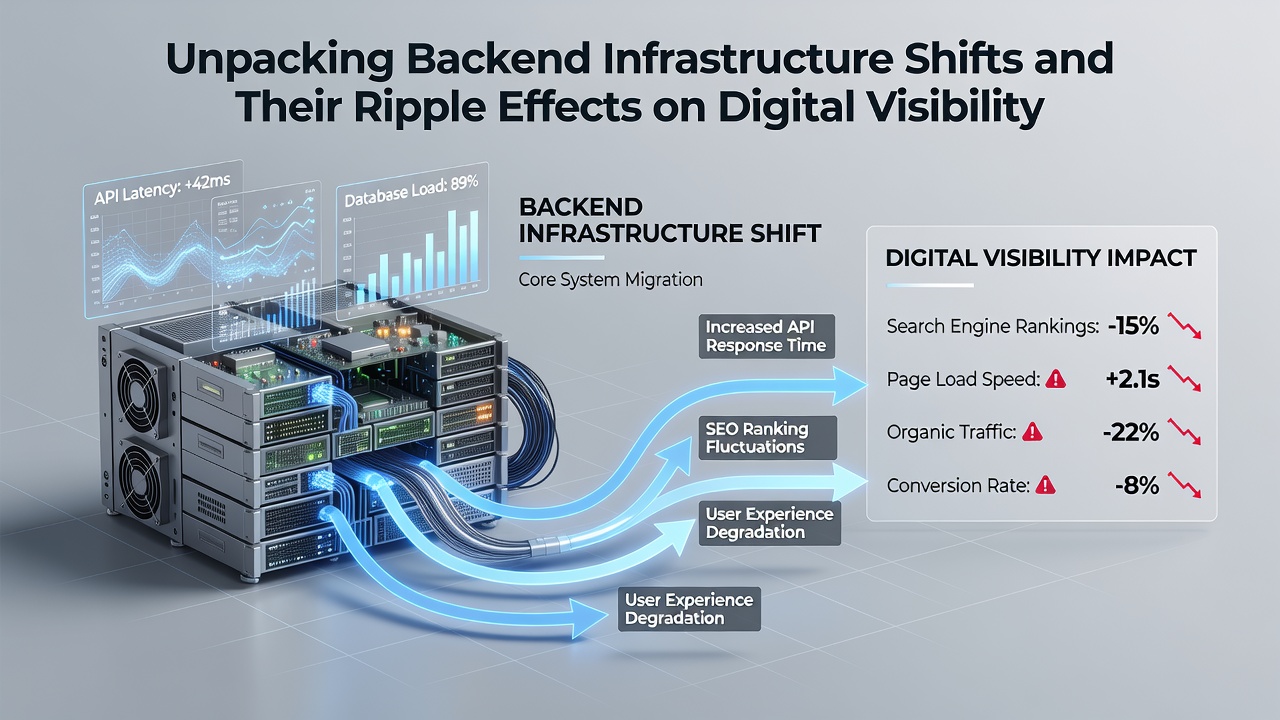
Backend infrastructure has undergone steady evolution as organizations move away from traditional on-premises servers toward distributed cloud environments, serverless architectures, and edge computing networks, while these changes alter how search engines crawl, index, and evaluate websites for digital visibility. Data from industry reports shows that migration to cloud-based hosting often modifies crawl budgets because dynamic resource allocation replaces fixed server responses, and observers note that such adjustments can either expand or constrain the number of pages a crawler processes in a given session.
Core Components of Recent Backend Transitions
Organizations have increasingly adopted container orchestration tools like Kubernetes alongside content delivery networks that cache assets closer to end users, and these setups reduce latency while introducing new variables for indexing systems that rely on consistent server signals. Research indicates that edge nodes process requests at distributed locations rather than central data centers, which means geographic variations in content delivery can influence how consistently search bots receive full page renders. Figures from infrastructure analyses reveal that API-first designs have replaced monolithic backends in many sectors, allowing modular updates that affect structured data markup and schema implementation without full site redeploys.
Security protocols have also shifted with the integration of zero-trust models and automated certificate management, while these layers add verification steps that sometimes delay initial connections and alter the timing patterns crawlers use to assess site reliability. Experts have observed that database migrations from relational systems to NoSQL or distributed ledgers change how dynamic content generates, which in turn impacts the freshness signals that influence ranking algorithms.
Direct Effects on Crawling and Indexing Processes
Crawlers depend on predictable response codes and stable sitemap structures, yet backend shifts to serverless functions can produce variable execution times that occasionally result in incomplete fetches or timeout errors. Studies have found that when hosting environments incorporate auto-scaling groups, the underlying IP ranges expand, requiring webmasters to update robots.txt directives and server logs to maintain accurate tracking of bot activity. According to OECD digital infrastructure assessments, regions with widespread adoption of edge caching report measurable differences in how quickly new content appears in search indexes compared to legacy setups still reliant on single-region hosting.
Page speed metrics tied to Core Web Vitals become more sensitive under these conditions because backend optimizations like lazy loading at the origin level interact with CDN configurations, and data shows that sites experiencing infrastructure overhauls often see fluctuations in largest contentful paint scores until caching rules stabilize. Those who monitor server logs after such transitions frequently identify shifts in crawl frequency that correlate with changes in hosting provider policies rather than content updates alone.
Broader Ripple Effects on Search Visibility Metrics
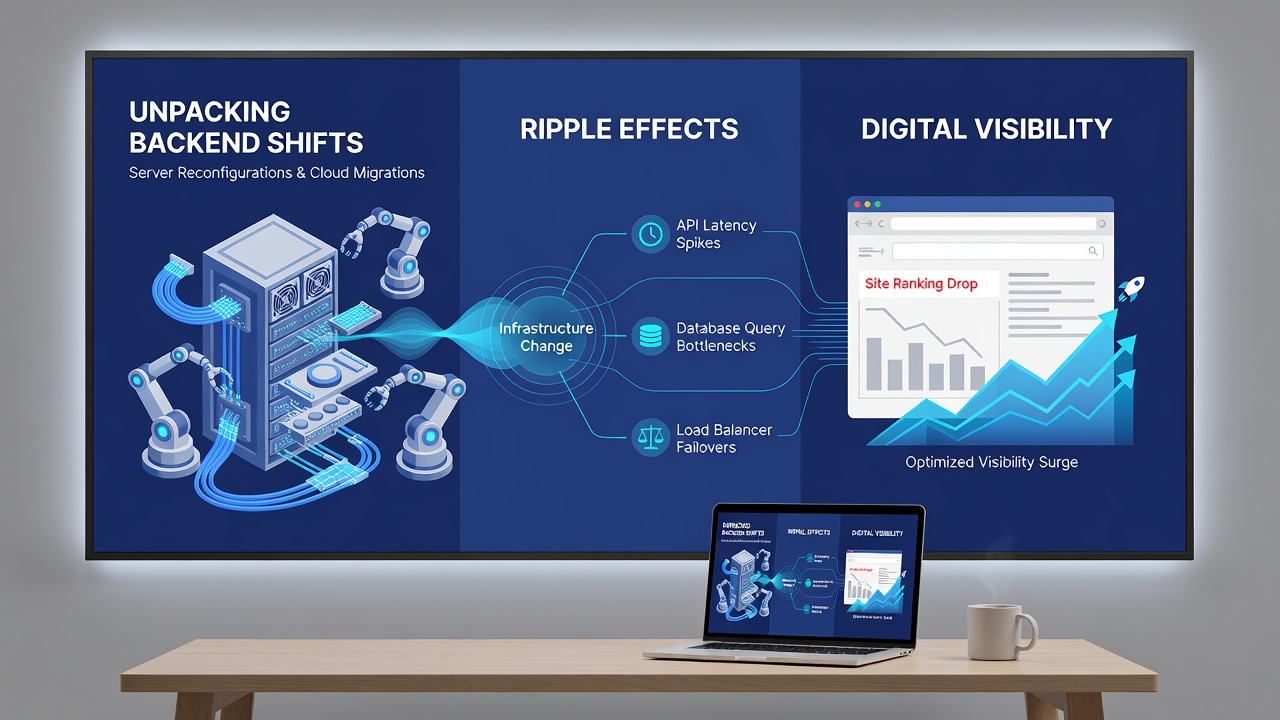
Digital visibility encompasses not only rankings but also appearance in featured snippets, knowledge panels, and local packs, and backend modifications can indirectly affect these by altering how structured data renders or how mobile-first indexing interprets responsive elements served from different origins. Research from academic sources tracking infrastructure upgrades indicates that organizations completing cloud migrations between 2024 and 2025 experienced temporary dips in organic impressions when new headers or compression methods interfered with bot parsing routines. By September 2026, further standardization of HTTP/3 protocols across major providers is projected to standardize connection behaviors, potentially smoothing out some of the visibility variances observed during earlier transition phases.
Security enhancements such as stricter content security policies sometimes block certain crawler resources if misconfigured during backend refactoring, and analysts note that this leads to reduced indexing of JavaScript-dependent elements until adjustments are made. International regulatory bodies have documented cases where data residency requirements force regional server deployments that fragment global crawl consistency, requiring additional hreflang and canonical configurations to preserve unified visibility across markets.
Case Examples from Different Sectors
One e-commerce platform that relocated its inventory database to a multi-region cloud setup recorded improved uptime alongside initial drops in product page indexing until sitemaps were regenerated with updated lastmod timestamps. A media outlet adopting edge functions for article personalization observed faster load times yet encountered challenges with duplicate content detection because dynamic variants appeared under similar URLs before canonical rules were refined. Government digital service portals in several countries have reported that infrastructure modernization efforts improved accessibility compliance while necessitating audits of crawl paths to ensure regulatory information remained prominent in search results.
Conclusion
Backend infrastructure shifts continue to reshape the technical foundation that supports digital visibility, with effects ranging from altered crawl efficiency to modified performance signals that influence how content surfaces in search environments. Organizations tracking these developments benefit from monitoring server responses, testing indexing behavior post-migration, and aligning configurations with evolving crawler expectations. As adoption of distributed systems expands through 2026 and beyond, the interplay between origin architecture and search evaluation methods remains a measurable factor in online discoverability across industries and regions.